
Bring Disconnected Mining Information Into a Shared Operational Context
Organise approved mining and industrial information around a defined operational problem so teams can understand the available context, identify what requires review and make better-informed decisions.
Powered by AIMINE, an AI-powered mining operations intelligence platform designed around complex industrial environments.
AIMINE must be labelled Available, Pilot/Early Access or Upcoming only after its current maturity has been formally confirmed.

A connected view.
Confirm source ownership, identifiers and the agreed update frequency before connecting operational information.
Illustrative workflow, not product UI. Source update frequency is confirmed during discovery.
A Mine Can Generate More Information Than Its Teams Can Use Together
Mining operations involve multiple activities, teams and information sources. When operational context remains separated across systems and processes, teams spend time reconstructing the situation before deciding what requires attention.
Operational Information Is Distributed
Relevant information may sit across business applications, reports, databases, spreadsheets, documents and team updates.
Systems Describe Different Parts of the Operation
One source may show an operational status while another provides the surrounding business or process context.
Updates Can Be Difficult to Compare
Different naming conventions, timestamps, locations and operational categories make information harder to review consistently.
Teams Need Context, Not More Screens
Adding another dashboard does not solve the problem if users still need to reconcile information manually.
Harsh Environments Affect Information Availability
Connectivity, data quality, source reliability and update frequency may vary across sites and operational areas.
The intelligence gap sits between the information generated across mining operations and the context people need to make the next decision.
Structure the Operating Picture Before the Decision Is Made
AI can help organise approved information around a defined operational question, connect relevant context and surface areas requiring review. The responsible mining team remains accountable for every operational decision and action.
Seven-Step Mining Intelligence Flow
Choose the Operational Question → Define the Scope → Connect Approved Information → Standardise the Context → Prepare the AIMINE View → Surface Review Areas → Make the Human Decision
- 01
Choose the Operational Question
Begin with a clearly defined mining or industrial problem that requires better operational visibility.
- 02
Define the Scope
Confirm the included site, process, information categories, users and decision boundaries.
- 03
Connect Approved Information
Identify the systems, documents, files or operational sources that can provide relevant information.
- 04
Standardise the Context
Align available identifiers, locations, timestamps, statuses and operational terminology.
- 05
Prepare the AIMINE View
Organise the approved information into the configured operational context.
- 06
Surface Review Areas
Bring incomplete, conflicting or relevant information to the attention of the responsible team where supported by the implementation.
- 07
Make the Human Decision
Authorised operational personnel review the information and take the appropriate action through existing mining processes.
Before and After
Teams review separate systems, reports and updates before they can form a complete understanding of the operation.
Approved information is organised around the selected use case, providing a clearer context for operational review.
Apply AI to a Defined Operational Question
AIMINE should begin with a specific mining problem and a confirmed information environment. The current product scope is centred on operational visibility, context and human-led review.
What is happening in this operation?
Connected Mining Operations View
Bring approved information related to a selected mining operation into a more usable operational view.
Industrial Information Context
Organise available information around the relevant industrial process, location, activity or operational question.

What does the team need to review?
Operational Review Support
Prepare relevant information for review by site, engineering, production or operations teams.
Human-Led Decision Context
Provide a clearer information base while keeping responsibility for decisions with authorised personnel.
Where is the information incomplete?
Cross-Team Operational Understanding
Give permitted users a more consistent context for discussing the selected mining or industrial operation.
This use case depends on confirmed sources, users, product configuration and access controls.
Information-Gap Visibility
Identify missing, delayed or conflicting operational information where the available data and implementation support it.
This should not be described as predictive intelligence or automatic exception detection unless technically verified.
AIMINE
AI-Powered Mining Operations Intelligence Platform
Status awaiting confirmationExplore AIMINEAIMINE provides the mining-information and operational-review experience used within this solution.
Role of Ainfinite Core
Where included in the confirmed technical architecture, Ainfinite Core can support:
Connect approved sources
- Approved data and information connections
Build business context
- Business context
- AI models
Control access and workflow
- Permissions
- Workflow orchestration
Evaluate and govern
- Governance
- Evaluation controls
Build the Operational Context Around Trusted Information
AIMINE requires clearly defined sources, identifiers, ownership and update processes. The exact architecture should reflect the selected mining use case and the technical realities of the site.
Approved Information Sources
Depending on technical discovery, relevant information may come from:
- Existing mining applications
- Industrial business systems
- Operational databases
- Approved reports and documents
- Spreadsheets and controlled files
- Internal APIs
- Manual operational updates
- Other confirmed data sources
These categories do not represent prebuilt AIMINE connectors.
Data Ingestion and Validation
- API connection where supported
- Controlled database access
- File-based imports
- Scheduled updates
- Field validation
- Timestamp validation
- Source identification
- Processing-error handling
- Data-quality checks
Operational Context Model
Relevant information may be organised according to:
- Site
- Operational area
- Process
- Activity
- Location
- Status
- Responsible team
- Timestamp
- Source system
The final context model must be defined for the selected use case.
Intelligence and Review Layer
Depending on the confirmed implementation:
- Information organisation
- Operational context assembly
- Record and status alignment
- Missing-information visibility
- Conflicting-information review
- Operational summarisation
- Review-area preparation
- Human decision support
Operational Experience Layer
- AIMINE operational view
- Role-based information access
- Selected operational context
- Review status
- Human observations
- Existing decision process
- Approved reporting where supported
Provenance, Freshness and Ownership
Source provenance
Identify the originating source and responsible owner for each operational field.
Information freshness
Confirm source timestamps and the agreed update frequency during technical discovery.
Human action
Keep operational decisions with the responsible team and record outcomes through the appropriate system.
Mining Data Controls
Use-Case Boundary
Define the exact operational question before connecting information.
Source Ownership
Identify which system or team owns each field, status and operational record.
Data Provenance
Maintain visibility into where the displayed information originated.
Information Freshness
Show when each source was last updated. Do not present delayed information as current.
Common Terminology
Align operational labels and identifiers so information from different sources can be reviewed consistently.
Permission-Aware Access
Restrict information according to site, team, role and operational responsibility.
Human Decision Authority
Keep mining professionals responsible for operational, production, equipment and safety decisions.
No Automatic Control
AIMINE should not be shown sending commands to equipment or automatically changing industrial processes.
Site-Specific Evaluation
Test the configured view using representative records, delayed updates, missing fields and conflicting information.
Deployment Assessment
Confirm connectivity, infrastructure, hosting, security, source access and operating-environment requirements for each site.
Mining intelligence becomes useful only when operational information has clear meaning, ownership and context.
Measure Whether Operational Context Becomes Clearer and More Usable
Initial measurements should focus on information coverage, quality and review effectiveness. Production, cost or efficiency claims require additional confirmed capabilities and verified operational evidence.
Information-Coverage Measures
- Approved sources connected
- Operational areas represented
- Required information fields available
- Records matched successfully
- Missing identifiers
- Duplicate records
- Unavailable sources
- Processing exceptions
Information-Quality Measures
- Field completeness
- Source update frequency
- Stale information
- Conflicting statuses
- Invalid timestamps
- Unresolved data-quality issues
- Source-system corrections required
Operational Review Measures
Where supported by the implementation:
- Operational reviews completed
- Areas identified for attention
- Information gaps found
- Conflicting information reviewed
- Average review time
- Review outcomes recorded
- Items returned for source correction
Adoption Measures
Where reporting is available:
- Authorised users
- Active operational users
- Teams using the shared view
- Reviews completed
- User-reported information gaps
- Operational areas added after the pilot
Intended Business Outcomes
Review the available records
- Clearer mining-operations visibility
- Better organisation of industrial information
- More connected operational context
Identify what needs attention
- Easier review of available information
- Faster identification of information gaps
Make a human-led decision
- More consistent understanding across teams
- Better support for human-led operational decisions
Operational Variations
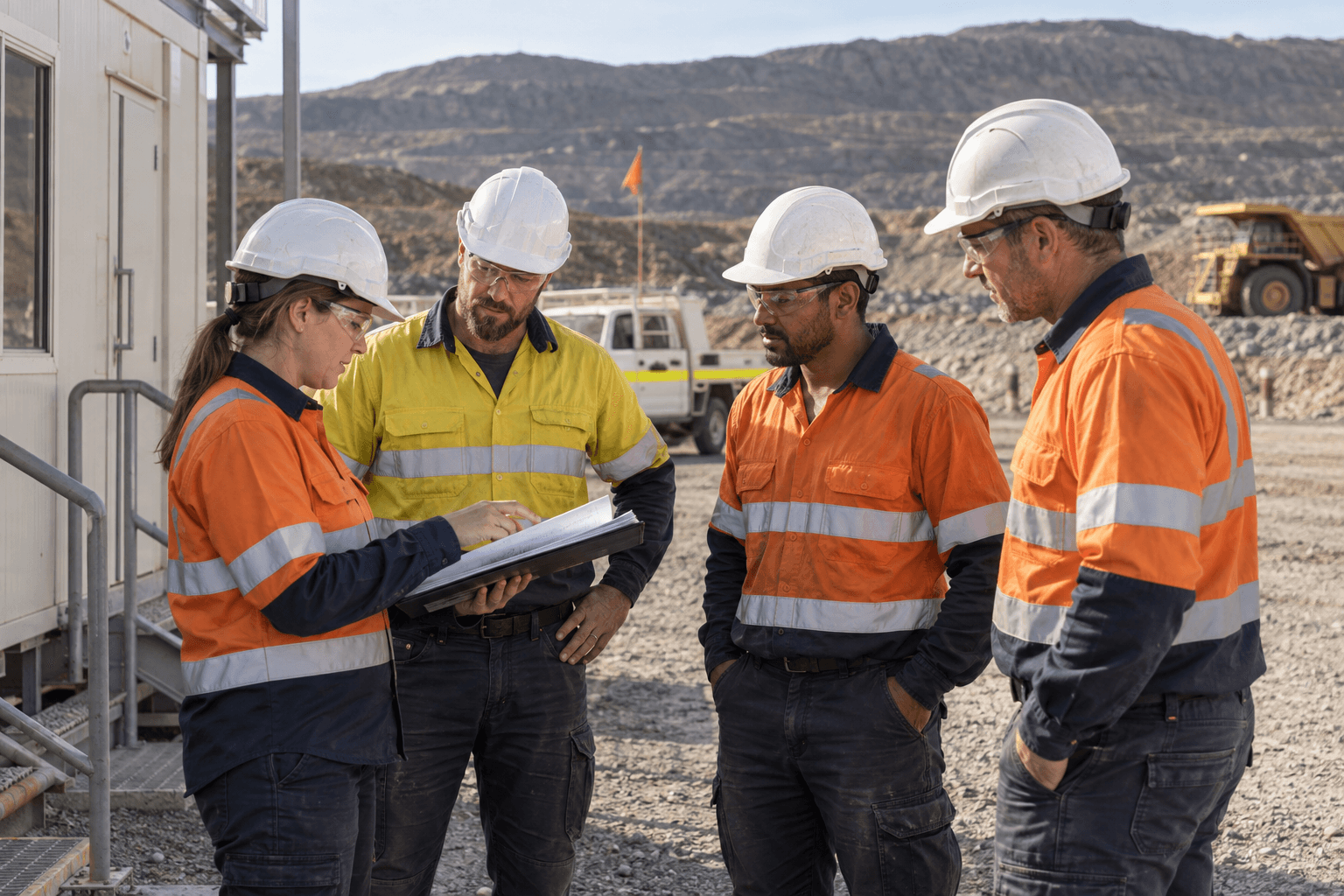
Open-Pit Operations
Define information scope according to available systems, connectivity and the selected operational process.
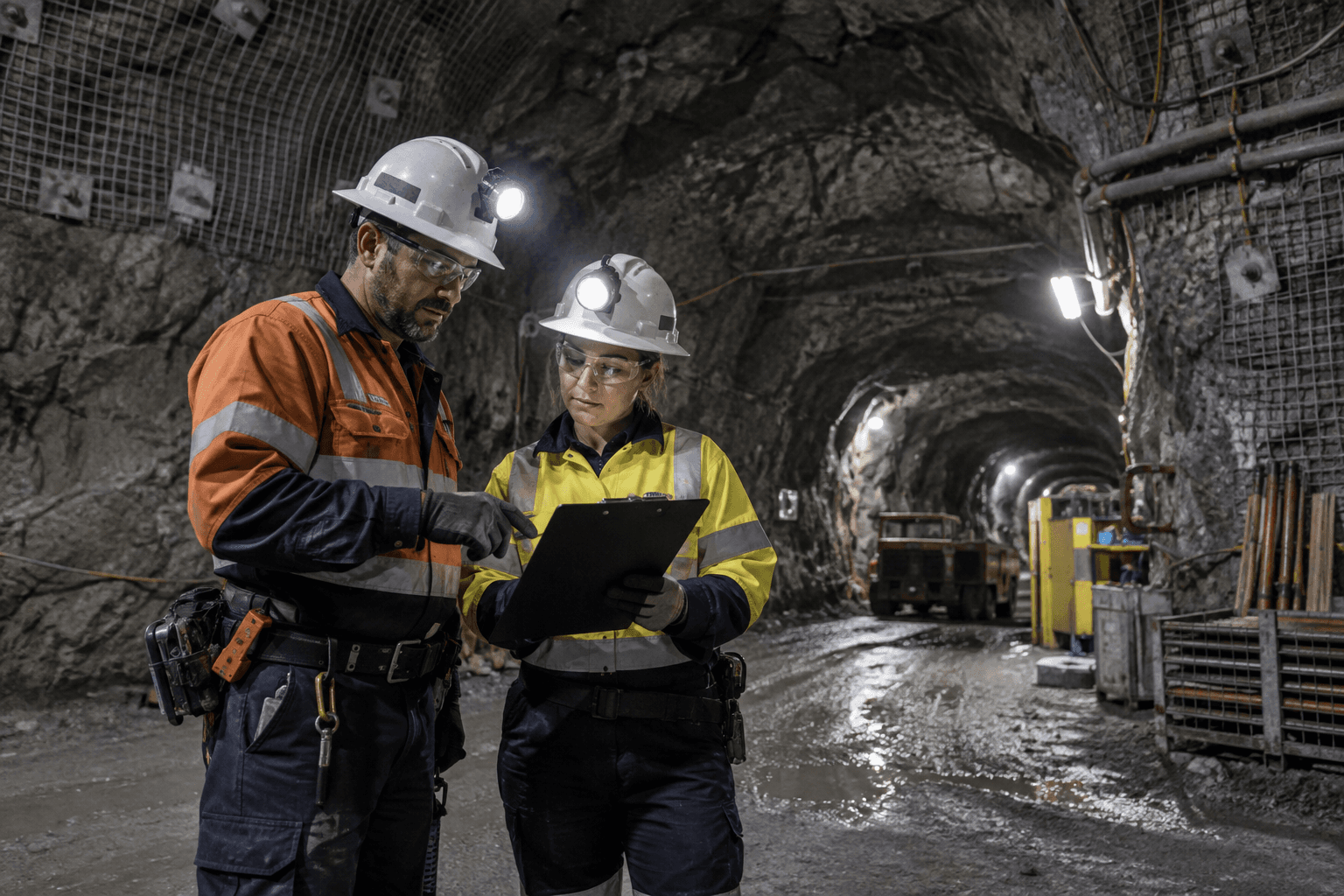
Underground Operations
Assess connectivity, infrastructure, data availability and access requirements before defining the solution architecture.
AI-generated illustrative settings. These images do not depict confirmed AIMINE deployments.
Evidence and Case Study Rule
No verified AIMINE customer deployment or approved public case study is currently available in the supplied material.
Do not publish production gains, downtime reductions, equipment-utilisation improvements, safety improvements, cost savings, efficiency percentages or ROI until measured and approved.
Pilot Evidence Structure
- 01Selected mining problem
- 02Current operational information environment
- 03Previous review process
- 04Configured AIMINE context
- 05Data and governance controls
- 06Verified information and review results
- 07Decision to expand or revise
Validate the Operational Context Before Expanding the System
Begin with one clearly defined mining problem, the people responsible for the decision and the information currently available. Build and evaluate the operational view before adding further data or use cases.
Seven-Step Implementation Path
Select the Use Case
Choose one operational problem that requires clearer information and context.
Define the Decision Context
Identify the responsible users, included operation and decisions the information will support.
Audit the Information
Review available systems, files, reports, ownership, quality and update frequency.
Map Data and Controls
Define identifiers, terminology, permissions, information boundaries and human responsibilities.
Configure AIMINE
Connect the approved information and prepare the operational experience within the confirmed product scope.
Validate With Operators
Test the view with site and operational teams using representative records, missing information and conflicting updates.
Measure and Expand
Add further sites, sources or operational questions only after the pilot meets the agreed information, governance and usability requirements.
Select the Use Case → Define the Decision Context → Audit the Information → Map Data and Controls → Configure AIMINE → Validate With Operators → Measure and Expand
A CLEAR STARTING POINT.
Start with one mining question. Establish trusted context. Expand from validated operational value.
Bring one mining challenge, the current information workflow and an approved data sample. We’ll help define the technical scope, operational context and pilot measurements.
Visit www.ainfinite.ai