
Move Goods with Better Visibility, Not More Guesswork
Bring fleet, shipment, warehouse and enterprise data together to help logistics and distribution teams identify delays, reduce manual coordination and make faster operational decisions.
Discuss Your Logistics Use CaseOne connected view.
- 01Fleet
- 02Shipments
- 03Warehouses
- 04Enterprise systems
Logistics Runs on Movement. Performance Runs on Visibility.
Every shipment depends on multiple moving parts, vehicles, drivers, warehouses, documents, routes, customers and enterprise systems.
When these operate in isolation, teams spend too much time tracking updates manually, responding to delays after they happen and coordinating information across disconnected platforms.
Applied AI can help logistics and distribution businesses turn this fragmented operational data into clearer visibility, faster exception handling, better fleet decisions and more automated workflows.
Ainfinite brings AI into existing logistics environments without requiring organisations to replace every system they already use.
A Growing Logistics Network Needs Better Operational Intelligence
Logistics Cost
India’s aggregate logistics cost was estimated at 7.97% of GDP in 2023-24, equivalent to approximately ₹24.01 lakh crore.
Source: DPIIT · Assessment of Logistics Cost in IndiaDigital Transactions
India’s Unified Logistics Interface Platform had facilitated more than 160 crore transactions by September 2025, showing the scale at which logistics data is becoming digitally connected.
Source: Ministry of Commerce & Industry / PIBGenAI Activity
Deloitte reported that 75% of surveyed supply-chain executives had at least one GenAI pilot or implementation underway, showing strong interest in AI across transportation and supply-chain operations.
Source: Deloitte · The Future of Freight 2025Global LPI Rank
India ranked 38th out of 139 economies in the World Bank’s 2023 Logistics Performance Index, improving from 44th in 2018.
Source: World Bank · Logistics Performance IndexWhat Logistics Teams Are Managing Every Day
See the whole movement
Vehicle positions and delivery updates need a shared operational context.
The next efficiency gain will come from connecting operational signals and acting on them faster.
Intelligence Across the Movement of Goods
Analyse vehicle activity, utilisation, routes and operational exceptions to improve fleet visibility.
Fleet IntelligenceBring together shipment signals so teams can identify delays, exceptions and delivery risks earlier.
Enterprise AI DevelopmentAutomate repetitive movement of information across inventory, dispatch, documentation and fulfilment processes.
Workflow AutomationExtract and organise information from invoices, PODs, manifests, transport documents and supporting records.
Document Intelligence / Generative AIUse AI agents to help operations teams prioritise exceptions, retrieve information and coordinate responses.
AI AgentsConnect intelligence across ERP, TMS, WMS, GPS, CRM and business databases.
AI IntegrationClearer fleet visibility
Connected through AinfiniteAI Built Around Everyday Logistics Operations
01Fleet visibility & control
Tensor Fleet helps organisations monitor fleet activity, utilisation, routing and operational exceptions.
Explore Tensor Fleet02Shipment documentation
Document Intelligence helps extract, classify and process invoices, PODs, manifests and operational documents.
03Receivables & cash flow
OptimAR can help logistics businesses prioritise receivables and improve follow-up visibility across customer accounts.
04Warehouse or site safety
SafeGuard can use existing CCTV for defined safety and compliance monitoring in warehouses and logistics facilities.
05Custom logistics workflows
Custom Enterprise AI allows Ainfinite to build enterprise AI around specific dispatch, distribution, routing or operational processes.
Connect Movement Data with Business Decisions
Scroll horizontally to explore all seven stages →
- 01
Vehicles, Shipments & Warehouse Data
- 02
TMS, WMS, GPS & ERP Systems
- 03
Secure Integration Layer
- 04
Ainfinite Core
- 05
AI Models, Agents & Analytics
- 06
Alerts, Insights & Automated Workflows
- 07
Operations, Dispatch & Management Teams
Operational AI Without Losing Control of Your Data
Logistics businesses handle customer information, shipment records, commercial data, driver information and operational systems.
Ainfinite's approach supports:
Your teams.
Your control.
- 01
Controlled Data Access
AI works with approved enterprise information and user permissions.
- 02
Human Oversight
Operational teams remain in control of critical actions and exceptions.
- 03
Secure Integration
AI capabilities can work alongside existing logistics and enterprise systems.
- 04
Traceable Information
Document and knowledge applications can link outputs back to authorised information sources.
- 05
Governed Deployment
AI can be introduced according to security, infrastructure and operational requirements.
Less Chasing.
More Control Across Operations.
Better Fleet Visibility
See important fleet and operational signals in a more usable form.
Earlier Exception Detection
Identify delays, routing issues and operational exceptions sooner.
Faster Dispatch Decisions
Help operations teams focus on high-priority actions instead of manually reviewing multiple systems.
Reduced Document Work
Automate repetitive processing across invoices, delivery records and shipment documents.
Better System Connectivity
Bring together logistics information that would otherwise remain spread across separate platforms.
Improved Customer Response
Give teams faster access to shipment and operational information when customers need answers.
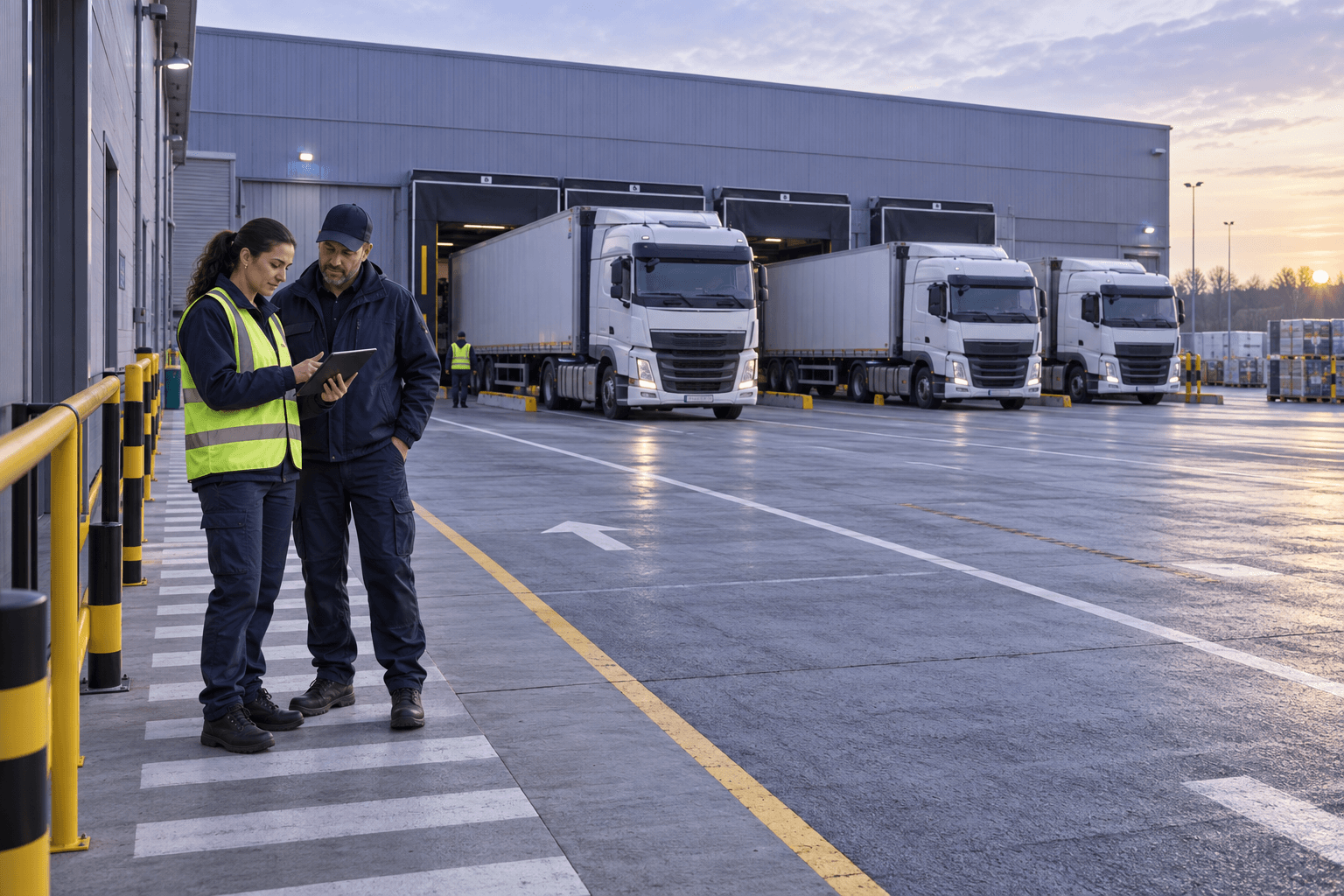
Know Where It Is.
See What Needs Attention.
A fleet operator may already have GPS, route data and vehicle information, but those systems often tell teams where a vehicle is, not necessarily what requires attention.
With Tensor Fleet, operational data can be turned into clearer fleet intelligence around utilisation, routing and exceptions.
Explore Tensor FleetStart with the Bottleneck That Costs You the Most Time
A logistics AI programme does not need to begin across the entire supply chain.
Start with one operational problem, fleet visibility, shipment exceptions, document processing or workflow coordination, prove the value and expand from there.
Identify the bottleneck, people and operational information involved.